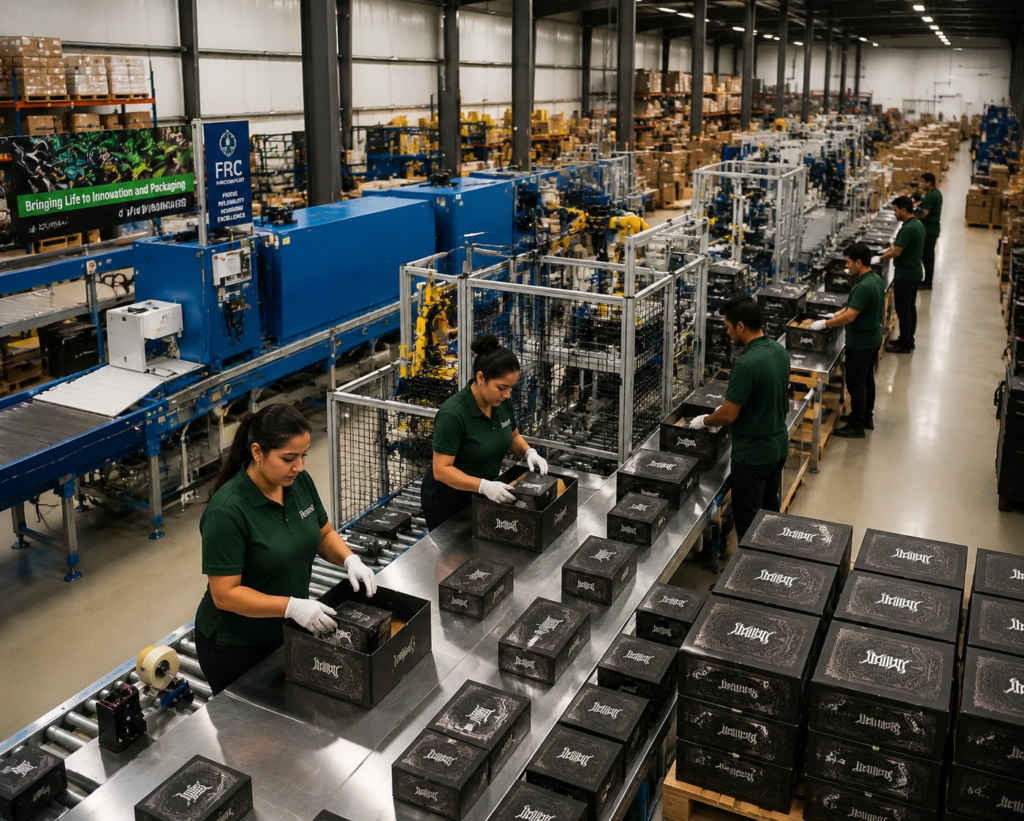
In the premium product market, physical structural integrity serves as the baseline for brand authority. While standard folding cartons offer basic containment, high-end consumer sectors require a much more substantial presentation medium. Top-tier brands rely exclusively on luxury rigid box packaging to safeguard their products and elevate their unboxing experience.
Unlike flexible materials that crush under minimal pressure, a custom-engineered rigid box maintains its perfect geometric form throughout the entire supply chain loop. Achieving this level of structural perfection requires a deep understanding of industrial materials and mechanical engineering. This condensed blueprint explores the technical components of premium box construction, focusing specifically on chipboard thicknesses, turned-edge execution, and magnetic closure tension levels.
1. Chipboard Thicknesses: Engineering the Structural Foundation
The absolute foundation of any high-performing packaging box is the underlying chipboard substrate. Engineers measure this dense, recycled fiberboard core in points (pt) to match the appropriate structural load:
50 pt to 60 pt: Best for lightweight products such as premium cosmetics, delicate jewelry items, or high-end tech accessories. It provides a crisp structure without adding excessive bulk.
80 pt (The Luxury Standard): The industry benchmark for standard retail presentation boxes. It delivers a solid weight and a satisfying rigidity that premium buyers instantly associate with quality.
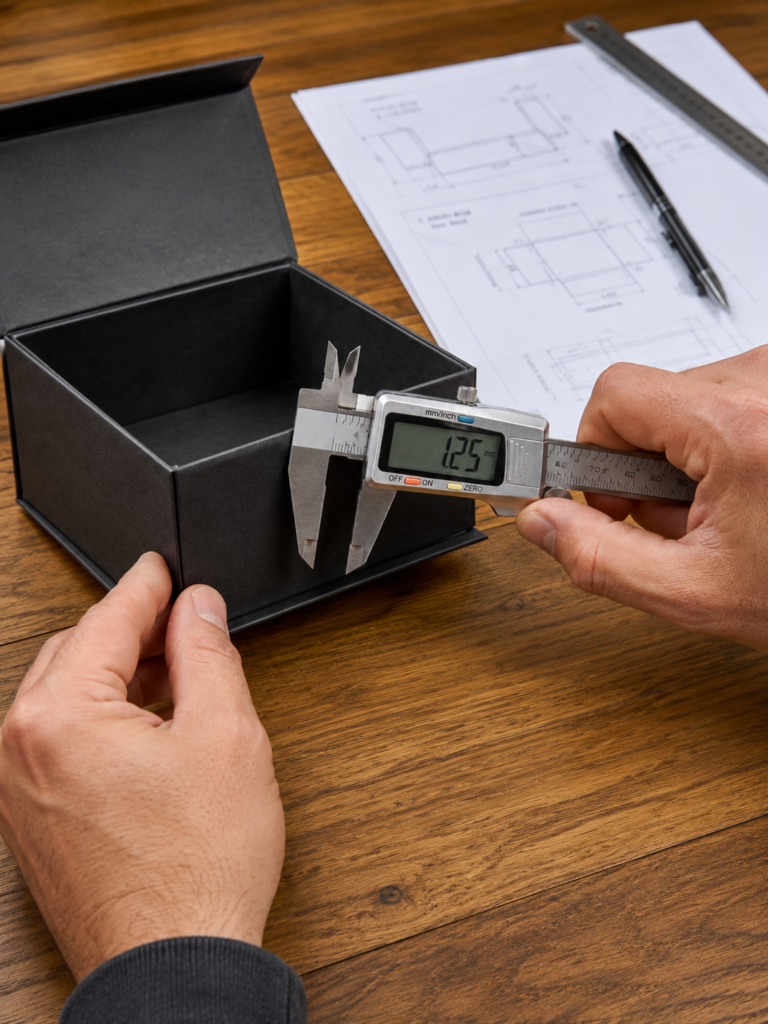
100 pt to 120 pt: Mandatory for heavy luxury goods like premium spirits, glass cosmetic sets, or complex multi-tier influencer kits. It completely eliminates warp risks during transit.
Choosing high-density, multi-ply recycled greyboard ensures that the box panels remain perfectly flat and entirely resistant to atmospheric humidity spikes.
2. Mastering the Art of Turned-Edge Execution
Once engineers establish the rigid baseline substrate, they must apply the exterior aesthetic wrap. High-end brands achieve a premium look through a process known as turned-edge execution.
During this automated or hand-crafted assembly loop, a precision machine cuts the exterior liner slightly larger than the underlying chipboard panels. Specialized rollers apply a thin, uniform layer of high-tack adhesive across the entire sheet. The machinery then presses the wrapped assembly firmly over pre-scored greyboard edges, folding the excess material cleanly over the lips to the interior side.
Consequently, the consumer never encounters exposed paper seams or rough structural joints. To ensure clean corners, manufacturers implement sharp 90-degree V-groove scoring on the chipboard beforehand, rather than relying on standard die-cut scores.
3. Calibrating Magnetic Closure Tension Levels
The moment of closure provides a vital sensory touchpoint during the unboxing sequence. Incorporating hidden rare-earth magnets into the double-wall chipboard construction elevates a standard box into an interactive experience. However, achieving the perfect acoustic snap requires exact calibration of magnetic tension fields.

To optimize luxury rigid box packaging for a premium tactile response, we utilize small, high-energy Neodymium (NdFeB) magnets. Our assembly team routes precise circular pockets directly into the raw chipboard core before applying the final paper wrap. Consequently, the magnets remain completely invisible to the eye, yet they deliver a reliable, satisfying physical snap every single time the container closes without tearing the delicate wrap paper.
4. Protecting Content Integrity with Custom Interior Inserts
A beautifully engineered exterior shell means absolutely nothing if the premium product shifts loose and shatters inside during long-distance transit. Therefore, a complete packaging system must seamlessly integrate internal fitments that complement the rigid exterior.
For fine cosmetics, electronics, or heavy glass items, we highly recommend utilizing precision die-cut or CNC-routed EVA (Ethylene-Vinyl Acetate) foam inserts. This high-density foam absorbs heavy drop forces and can be lined with velvet or micro-satin fabrics to prevent surface scuffing.
5. Domestically Engineered Production Loops in Chicago
Executing these highly detailed engineering features consistently across massive commercial production volumes requires flawless quality control. Sourcing your assets from our centralized manufacturing facility at 6600 W Armitage Ave, Chicago, IL 60707, United States establishes an exceptionally tight quality control loop. Our specialized domestic engineers manage every stage of assembly, from initial CAD structural prototyping to automated turned-edge wrapping.
By sourcing domestic, USA-made materials and operating precision automated equipment right here in Chicago, we completely eliminate the long shipping lead times and communication risks associated with overseas brokers. Furthermore, our localized production loop shrinks your supply chain’s carbon footprint, satisfying your environmental goals while supporting an agile, on-demand inventory strategy.
Partner With Our Structural Engineers Today
Do not allow fragile, uninspired packaging structures to undermine your product’s premium market placement. Partner with the specialized manufacturing team at Petra and Holum to build beautiful, mathematically precise luxury rigid box packaging systems that command respect through undeniable luxury.