

In 2026, sustainable packaging for the fashion industry has moved past “eco-friendly” as a marketing buzzword. Instead, it has entered a high-stakes arena of regulatory compliance and precision engineering. Because the EU’s Packaging and Packaging Waste Regulation (PPWR) takes full effect in August 2026, fashion brands must legally reduce empty space, eliminate “forever chemicals” (PFAS), and ensure 100% recyclability. At Petra and Holum, we translate these global mandates into luxury execution. Consequently, your brand’s unboxing experience remains premium while meeting the strictest global standards.
1. Eliminating Single-Use Poly Bags
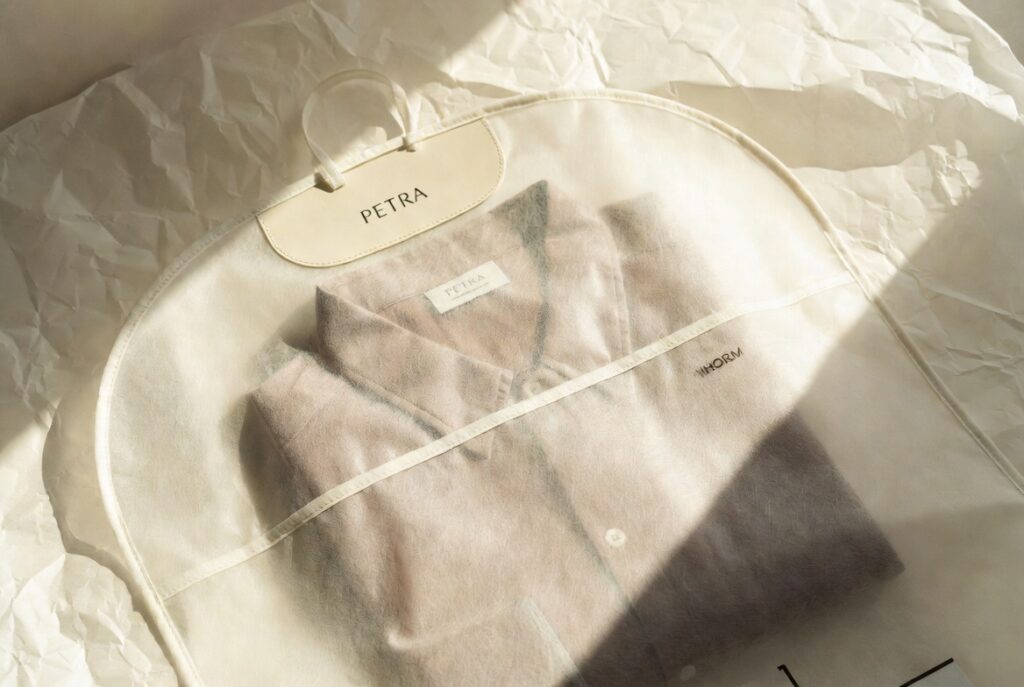
The clear plastic poly bag—once the industry standard for protecting garments—is disappearing due to low recycling rates. Fortunately, modern material science offers excellent technical successors to anchor sustainable packaging for the fashion industry:
- Hydropol™ Garment Bags: This next-generation polymer performs like plastic but dissolves safely in water without leaving microplastics.
- Seaweed-Based Mailers: Transparent, bio-based films derived from kelp offer high clarity for barcode scanning while remaining fully home-compostable.
- Glassine Paper Envelopes: This pH-neutral, moisture-resistant paper solution provides a sleek, translucent finish suitable for luxury apparel.
2. Lightweight Luxury and Material Efficiency
In 2026, physical weight no longer equates to luxury. On the contrary, the most forward-thinking fashion houses now adopt lightweighting as a symbol of sophisticated engineering. Specifically, designers use molded pulp inserts to replace plastic foam with precision-engineered bamboo or sugarcane pulp. This choice minimizes shipping volume and fuel emissions. Furthermore, we design mono-material hardware, including all-aluminum magnetic closures or 100% paper-based hang-tag fasteners. Because we use a single material family, the entire package moves through a single recycling flow seamlessly.
3. Navigating the 2026 PPWR Mandates
Any fashion brand selling in the EU must comply with the PPWR. Therefore, this legal framework alters sustainable packaging for the fashion industry through three major requirements:
- Anti-Empty Space Rule: E-commerce packaging must comply with a 50% maximum empty-space limit. Consequently, brands face non-compliance fines for oversized boxes filled with air.
- PFAS Bans: Material coatings can no longer contain toxic forever chemicals. Instead, we utilize water-based aqueous coatings to provide grease and water resistance.
- Digital Passports: Standardized QR codes now provide consumers with real-time guidance on how to sort and recycle each component.

4. Circular Logistics Metrics
The 2026 fashion supply chain treats packaging as a logistical asset rather than a consumable. For example, brands utilize durable, recycled-plastic mailers designed for 20+ shipping cycles. Additionally, we design our rigid boxes with resale recovery in mind, ensuring the container remains pristine for secondary marketplaces.
|
Packaging Element
|
Traditional Choice
|
2026 Sustainable Strategy
|
|---|---|---|
|
Garment Protection
|
LDPE Poly Bag
|
Hydropol™ / Seaweed Film
|
|
Luxury Inserts
|
Plastic Foam / Silk
|
Molded Pulp / Organic Cotton
|
|
Inks & Branding
|
Petroleum-Based
|
Soy-Based / Laser Etching
|
5. Summary: The Fashion Packaging Roadmap
To remain competitive, brands must audit their SKU sizes and implement right-sizing immediately. Furthermore, engineers must verify that all coatings and adhesives remain 100% PFAS-free. Partnering with a domestic production partner reduces the carbon miles of your luxury supply chain, fulfilling the core environmental goals of your ESG strategy.
Ready to elevate your apparel presentation?