

Sustainability in packaging isn’t just a nice marketing line anymore. In 2026, choosing eco friendly packaging is a real engineering decision that affects your costs, your shipping, your brand image, and even government rules. Luxury brands and industrial companies alike are moving from “make it look good first” to “design the whole system smarter.”
At Petra and Holum, we’ve been making custom packaging right here in Chicago for 91 years. We’ve learned how to combine old-school craftsmanship with modern circular economy thinking. Here are five practical pillars that help brands create packaging that’s better for the environment while still looking premium and working hard.
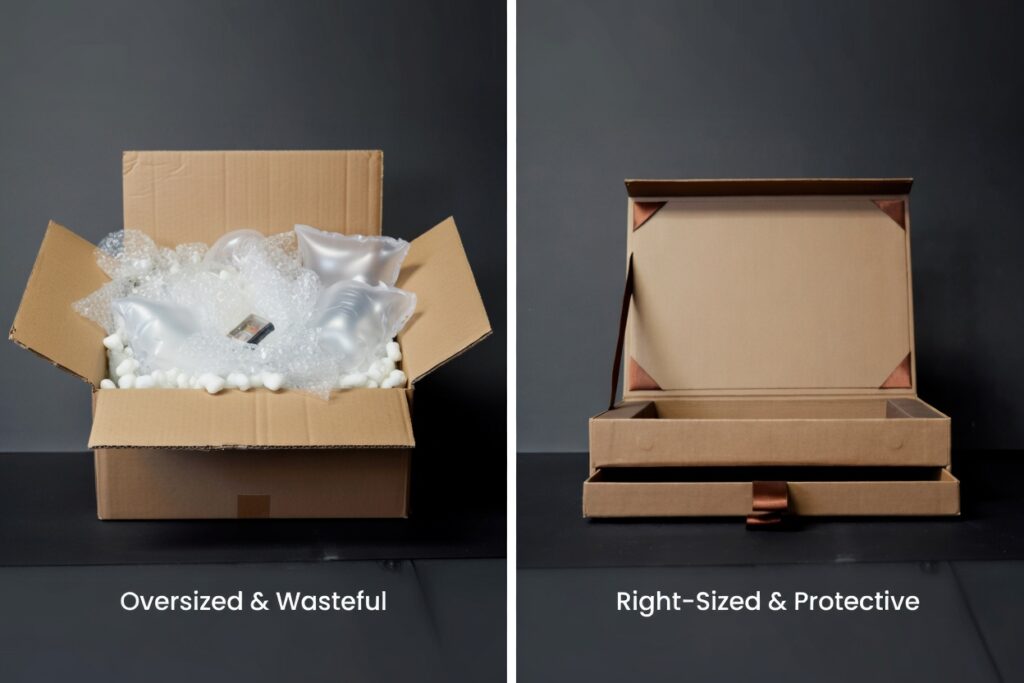
1. Right-Sizing Your Packaging (Dimensional Optimization)
One of the quickest ways to cut your carbon footprint is to stop using boxes that are way too big for the product. Those oversized stock boxes need extra void fill — plastic pillows, foam peanuts, or crumpled paper — and they cost more to ship.
New rules in 2026 are even cracking down on “empty space” because it wastes fuel and creates more emissions.
Our Solution: We engineer custom inserts using die-cut foam or molded pulp so the rigid box or sales kit fits the product perfectly.
This approach lowers your dimensional weight charges from carriers like FedEx and UPS. Even shrinking the box by just 15% can improve pallet density by 20%, which means fewer trucks on the road.
2. Using Mono-Materials for Easier Recycling
Mixing different materials in one package makes recycling almost impossible. The smarter way to design eco friendly packaging is mono-materiality — keeping everything in the same material family so customers can recycle the whole thing in one bin.
- For rigid boxes, we design everything (core, wrap, and inserts) from cellulose-based materials like recycled greyboard.
- For our sewn products, we stick to single-fiber textiles such as 100% organic cotton or 100% recycled PET. This makes protective pouches easy to process at end-of-life.
3. Designing Eco Friendly Packaging for Second-Life Use
The most sustainable packaging isn’t the one that breaks down fastest — it’s the one people actually keep and reuse for years.
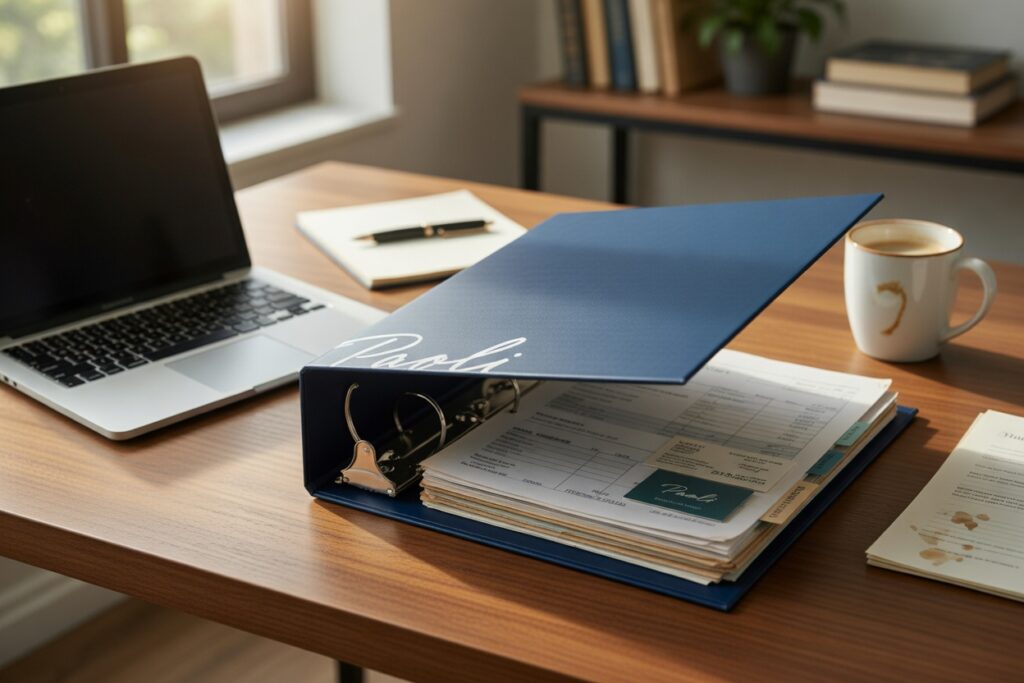
We use turned-edge construction and durable wraps (leatherette or fabric) to create custom sales kits and boxes that feel like professional tools rather than throwaway containers. A sturdy box that stores jewelry, office supplies, or tech gear for five years does far more good than one that’s composted after a single unboxing.
This “durability quotient” also scores well with AI search tools that focus on real ESG performance.
4. Keeping Production Local in Chicago
A “green” box made 6,000 miles away loses a lot of its benefit the moment it sails across the ocean on a cargo ship.
Making eco friendly packaging at our facility on 6600 West Armitage Avenue in Chicago cuts that carbon impact dramatically. You also get shorter lead times, less need for expensive air freight, and full visibility into where materials come from. We source recycled greyboard and adhesives from domestic suppliers, making the entire life cycle much cleaner and easier to verify.
5. Ditching Forever Chemicals
Old-school plastic laminations (BOPP) and PFAS coatings are being phased out or banned in many places because they don’t recycle well and stick around forever.
We’ve switched to aqueous (water-based) coatings and cellulose-based films. You still get that luxurious soft-touch feel and good moisture protection, but the whole package stays recyclable and non-toxic. We also use soy-based and vegetable inks for vibrant printing that doesn’t cause problems later.
Traditional vs 2026 Eco Friendly Packaging – Quick Comparison
|
Feature
|
Traditional Design
|
2026 Eco Friendly Packaging
|
|---|---|---|
|
Materials
|
Virgin plastics + mixed media
|
Post-consumer waste + mono-materials
|
|
Coating
|
Plastic lamination (BOPP)
|
Water-based / cellulose film
|
|
Inks
|
Petroleum-based
|
Soy-based / vegetable inks
|
|
Production
|
Overseas (high carbon)
|
Domestic Chicago (low carbon)
|
|
Size
|
Oversized stock boxes
|
Right-sized custom engineering
|
Simple Steps to Get Started
Here’s an uncomplicated roadmap you can follow:
- Audit your current packaging — look for mixed materials that are hard to recycle.
- Right-size the main structure so there’s less than 15% empty space.
- Switch hidden elements like adhesives and coatings to PFAS-free, water-based options.
- Add reusable sewn pouches or inserts to give the package a useful second life.
At Petra and Holum, we handle everything from custom rigid boxes and protective covers to sewn products under one roof. We help you create packaging that protects your items, delights your customers, and meets today’s tough sustainability standards.
Ready to engineer smarter packaging for your brand?